

Engineering Virality: How Social Media Algorithms Work in 2026

For years, we described platforms like Instagram, TikTok, and YouTube as distribution systems — pipes through which content flowed, ordered by relevance, engagement, or recency. That framing is now outdated.
What we are dealing with today is much more than a feed. It is a prediction engine.
The modern algorithm does not ask, “What content should we show this user?” It asks a more precise question:
“What sequence of stimuli will keep this user inside the system for longer than their last session?”
Search still operates on an index. Google crawls, parses, and ranks documents based on relevance, authority, and increasingly, synthesized answers through AI overlays.
But social platforms have moved past ranking. They construct a dynamic model of who you are in real time, then serve content to that model.
Your feed has officially become a behavioral mirror.
Controversial take: I am absolutely convinced that your phone is watching you. Every pause, every flick of your eyes, every micro-expression as your face tightens or relaxes, every moment you drift deeper into the screen — it’s all being captured, modeled, and fed back into the system. The device in your hand has become a live sensor array, tuning itself to your exact psychological frequency. And if there are particles in your bloodstream acting as receivers, amplifiers, or bridges, then the interface runs even deeper, measuring thoughts, impulses, and attention itself then serving you more addictive content.
Anyway, every micro-action — how long you hover, whether you replay, where you tap, what you ignore — feeds into a constantly updating profile. That profile is then matched against millions of others who behave similarly. The system tests content against small clusters, observes the response, and either expands distribution or suppresses it entirely.
This happens in seconds.
What people call “personalization” is closer to probabilistic pattern matching. Platforms are getting to know you, but they also know how people like you behave, and it optimizes accordingly.
And so, creators supply the raw material; the platform refines, sequences, and distributes it in a way that maximizes consumption; and the result is an environment that feels addictive, even when it is not truly individualized.
For better or worse, we live in an instant-grat world, and content is the digital drug. Either play it safe and get skimmed over, or start producing potent stuff and claim your territory.
The Objective Is Session Length
There is a persistent belief that algorithms optimize for engagement (likes, comments, shares). That was once directionally true. It is no longer the primary objective.
The core metric is session length. Everything else feeds into that.
If a piece of content generates likes but does not extend time spent, it underperforms. If it holds attention, triggers a second video, and pulls the user deeper into the feed, it is rewarded.
This is why certain types of content dominate:
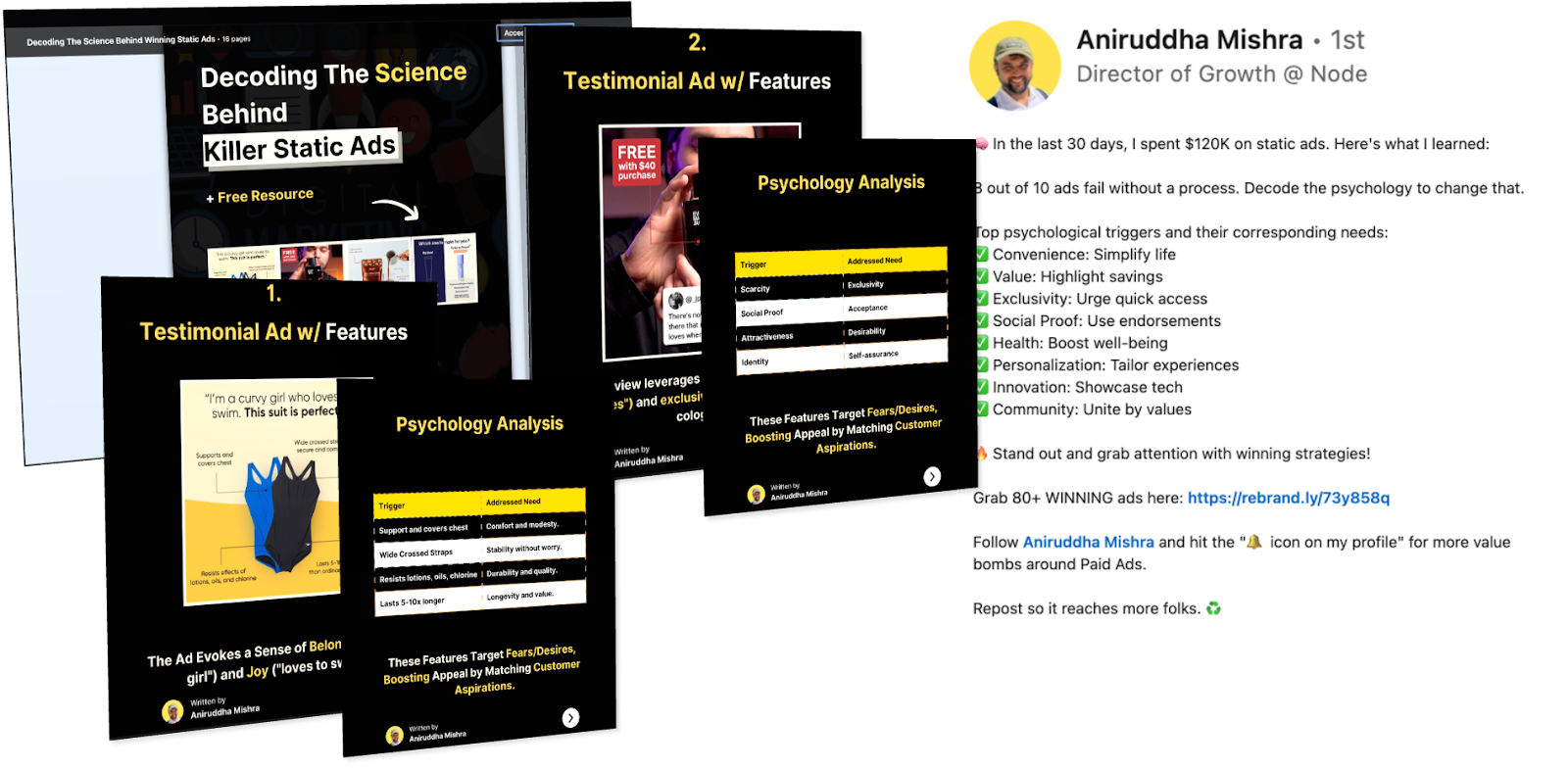
Videos that “loop” seamlessly
Carousels that require multiple swipes to complete
Narratives that delay resolution
Hooks that create tension within the first second
The system is evaluating how that content performs within a sequence. Does it cause the user to leave, or does it pull them further in?
Push notifications follow the same logic. They are no longer simple reminders. They are timed interventions, triggered by behavioral thresholds — moments when the system predicts a high probability of re-engagement.
The entire architecture is designed to keep the user inside the casino.
Distribution Has Partitioned Into Extremes
One of the more subtle shifts over the past few years is the disappearance of the middle.
There used to be a relatively stable gradient of reach. Small creators could grow steadily. Mid-sized accounts could maintain consistent visibility. Large accounts dominated, but the gap was not absolute.
That gradient has flattened into a binary outcome.
Content either clears a performance threshold and scales rapidly, or it fails early and effectively disappears.
This is a consequence of how modern distribution works:
Content is tested on a small audience sample
The system measures hold rate, completion, and interaction
If metrics exceed a threshold, distribution expands
If not, reach is capped
There is little tolerance for average performance. The system is optimized for efficiency. It allocates attention where it sees the highest return.
The result is a polarized environment:
A small percentage of creators capture a disproportionate share of reach
The majority operate in near-zero visibility unless something breaks through
This is often interpreted as bias toward large accounts. In reality, it is bias toward proven performance. Large accounts simply have more historical data working in their favor.
Instagram, TikTok, Threads, and YouTube: Four Different Games
Not all platforms operate identically, even if they share underlying principles.
Instagram has shifted heavily toward short-form video and algorithmic discovery, but it retains a strong social graph component. Existing relationships still matter. For smaller accounts, organic reach is inconsistent without sustained posting and engagement. From what I’ve gathered, Instagram functions increasingly as a credibility layer in 2026 — useful for reinforcing brand and converting existing interest rather than generating it from scratch.
TikTok remains the most aggressive merit-based distribution system. It is still possible for a new account to reach a large audience quickly. However, the bar for retention is high. Videos are evaluated within seconds, and weak openings result in immediate suppression.
Threads is in an earlier phase. Text-based content travels further than it does on most platforms, particularly when it is opinionated, specific, and easy to share. The environment rewards clarity and conviction over polish.
YouTube operates on a dual system. Shorts drive discovery. Long-form content builds depth, retention, and monetization. It is the most stable compounding platform, but also the most demanding in terms of production and consistency.
Each platform requires a different execution strategy. Treating them as interchangeable channels leads to diluted results.
What the Algorithm Actually Measures
The language around “engagement” obscures what is really happening.
The system tracks behavior with far more granularity:
Hold rate: Did the user stop scrolling?
Completion rate: Did they consume the entire piece?
Rewatch rate: Did they rewind or revisit?
Share velocity: How quickly is it being distributed?
Save behavior: Does the user want to return later?
Comment density: Is it provoking a response?
These signals are weighted differently depending on format and platform, but the principle is consistent.
The algorithm isn’t primarily asking whether people double-tapped your content (that does matter, but as a pretty cheap signal). It is asking whether they behaved differently because of it.
Scroll-Stopping Content Is Behavioral Design
The term “scroll-stopping” gets overused, but the underlying concept is precise.
You have a narrow window — often less than two seconds — to interrupt motion. If you fail, the content is gone.
The pieces that succeed tend to share a common structure. They create a clear expectation of payoff, then deliver on it.
In practice, that usually looks like one or more of the following:
A promise of practical advantage — information that improves status, income, or understanding
A challenge to a widely accepted belief
Access to information that feels exclusive or difficult to obtain
Synthesis of complexity into something immediately graspable
Alignment with a current cultural or industry moment
Depth that justifies saving or revisiting
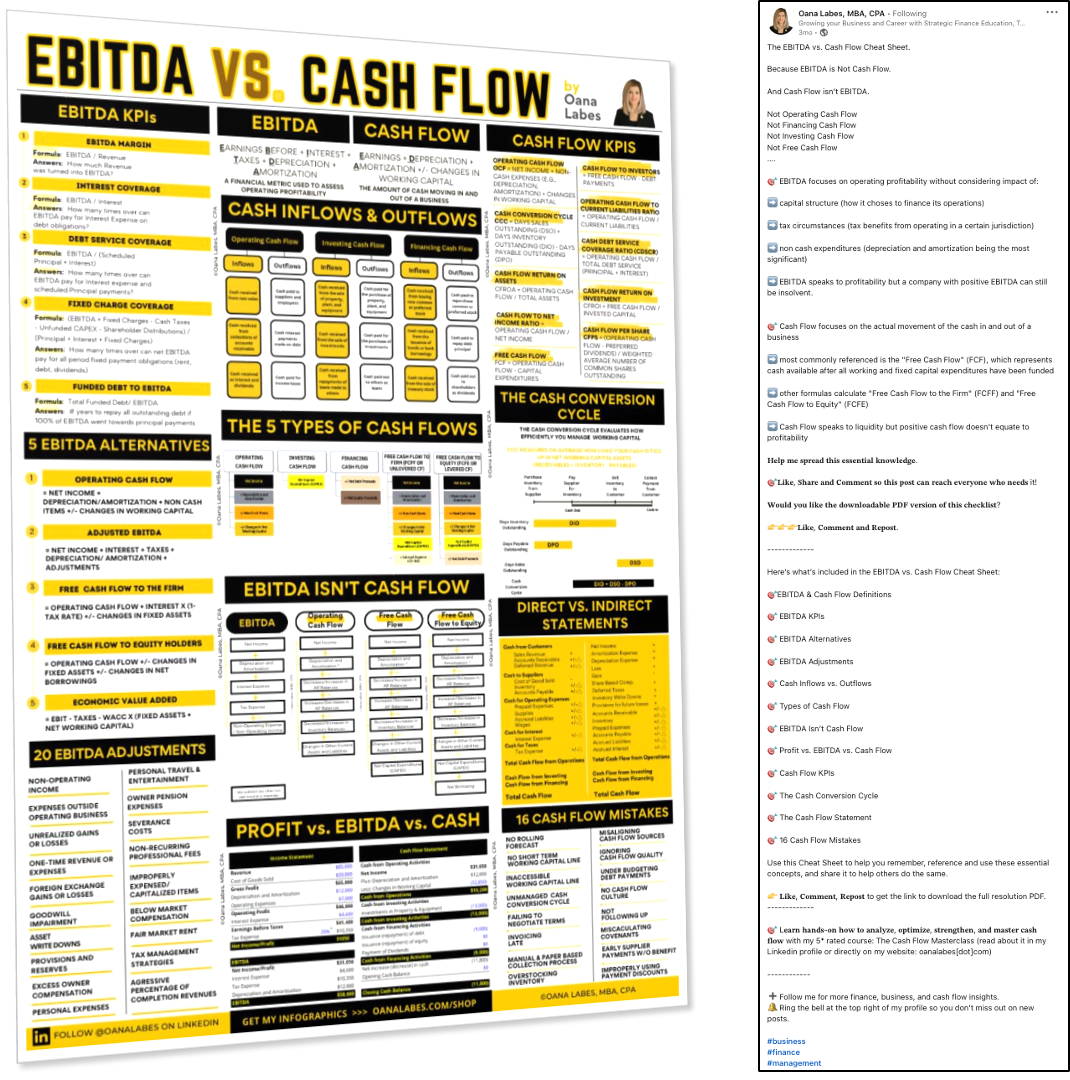
The format matters, but the principle is stable. People are scanning for value signals. If they detect one quickly, they pause. If not, they move on.
Instagram Is No Longer a Growth Engine
There is a tendency to treat all platforms as interchangeable growth channels. That assumption breaks down with Instagram.
Organic discovery still exists, but it is less reliable than it was. The platform is saturated, ad density is high, and competition for attention is intense.
Where Instagram remains effective is downstream:
Converting attention generated elsewhere
Reinforcing credibility
Hosting a portfolio of work that validates expertise
In other words, it functions better as a conversion surface or library of your value than a discovery engine.
If starting from zero today, it would not be the first place I’d invest effort even though I built a semi-viral brand on the channel back in 2018.
Content Creation Is Only Half the Equation
So, what are we to do with this algorithmic abyss today? Here’s my two cents: Most creators still spend the majority of their time producing content. This is important, but it’s no longer about pure output. It’s about amplification.
A more effective allocation looks closer to this:
30% creation
70% distribution and iteration
For my money, manual distribution remains one of the highest-leverage activities available. This might include:
Direct messages to relevant contacts
Cross-posting adapted to each platform
Encouraging collaborators to share
Reposting high-performing content in new contexts
Timing releases when attention is highest
The goal is to identify a small number of actions that consistently generate early traction, then systematize them.
If you’re making videos, focus on creating bangers with consistent drops on a once-per-month basis, while being weighted heavily on audience, community, and sharing. In one year’s time, you’ll have 10 to 15 killer videos and a community of loyal subscribers who genuinely love what you’re making… salivating for more since your drop schedule is pretty scarce.
The Underlying Game
It is easy to frame all of this as a content problem.
It is a behavioral systems problem.
The platforms reward content that changes how people act:
It makes them stop
It keeps them watching
It causes them to share
Everything else is secondary.
This is why average content struggles. It may be informative or well-produced, but it does not alter behavior in a measurable way.
In Closing
We are operating inside systems designed to maximize attention capture.
Content is the input. Behavior is the output.
And distribution is controlled by systems that optimize for continuation, not fairness.
You can approach this passively, producing content and hoping it resonates.
Or you can approach it structurally, designing content and distribution around how these systems actually function.
📩 I’m working to grow my audience. If you liked this article, please share it with your network.
📘 Go deeper with CONTENT CAPITALIST → Get It On My Website
👉 Pre-register for my upcoming book, The Ubiquity Engine → Join the Waitlist
🤝 Here’s how I work with SaaS startups → Services + Advisory